In an era where security and efficiency are paramount, the electric fence has emerged as a versatile solution that bridges the gap between traditional barriers and modern technology. This innovative system, once primarily associated with agricultural settings, has now expanded its reach to residential, commercial, and even wildlife conservation applications, offering a non-lethal yet highly effective deterrent.
How It Works: The Science Behind the Shock
At its core, an electric fence operates on a simple principle: it delivers a brief, high-voltage pulse through a conductive wire. An energizer converts standard power into intermittent pulses, typically every 1-2 seconds. When an animal or person makes contact with the charged wire while simultaneously touching the ground, the circuit completes, delivering a memorable but safe shock. Modern systems are designed with safety in mind—the pulse duration is extremely short, and the current is low enough to prevent serious injury while still being highly effective as a psychological and physical deterrent.
Beyond the Farm: Diverse Applications
While electric fences have long been the backbone of livestock management, their utility has expanded dramatically:
Agricultural Use: Farmers worldwide rely on electric fencing to contain livestock, protect crops from wildlife, and create rotational grazing systems. The flexibility and cost-effectiveness make it superior to traditional fencing for many applications.
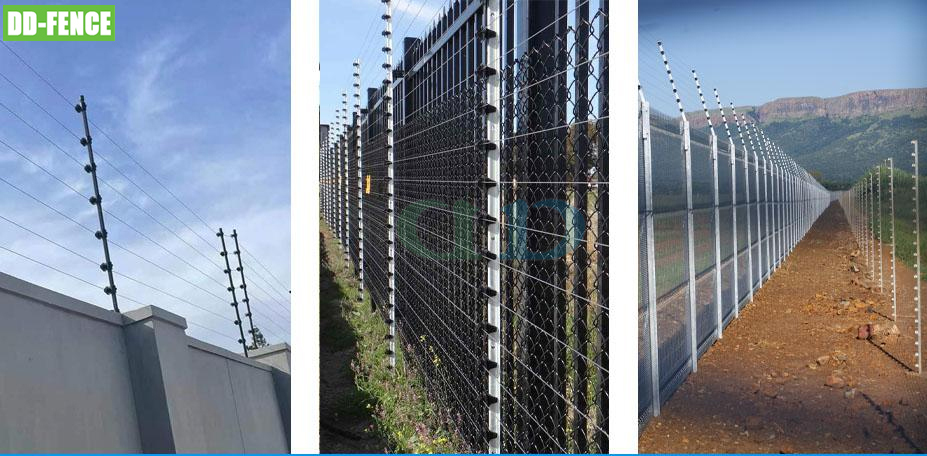
Security Perimeter: Residential and commercial properties increasingly use electric fences as a first line of defense. Unlike physical barriers that can be climbed or cut, an electric fence provides an immediate psychological barrier. Modern security systems integrate with alarms and monitoring, alerting property owners to any breach attempt.
Wildlife Management: Conservationists use low-impedance electric fences to protect endangered species from predators or to guide animal movements without causing harm. They're also employed to keep wildlife away from highways and urban areas, reducing human-animal conflicts.
Industrial Applications: Warehouses, construction sites, and sensitive facilities use temporary electric fencing to secure perimeters quickly and efficiently.
Advancements in Technology
Today's electric fence systems are smarter and more reliable than ever. Solar-powered energizers have eliminated the need for grid connections in remote areas. Smart controllers can now monitor fence integrity, detect faults, and send alerts to mobile devices. Some systems even integrate with home automation platforms, allowing users to check fence status from anywhere.
The Future of Fencing
As technology continues to evolve, we can expect to see even more intelligent systems—fences that can identify the type of intruder, adjust voltage automatically, and integrate with broader security ecosystems. The electric fence, once a simple agricultural tool, is poised to become an integral part of smart property management.
Whether you're a farmer protecting livestock, a homeowner securing property, or a conservationist managing wildlife, the electric fence offers a proven, adaptable solution that meets the demands of modern security and management challenges.